Solar Entry guide
Solar Panels for Homes: Cost, How They Work & Roof Suitability
Thinking about solar panels for your home? Here is a plain-English guide to how they work, what shapes the cost, and how to tell whether your roof is a good candidate.
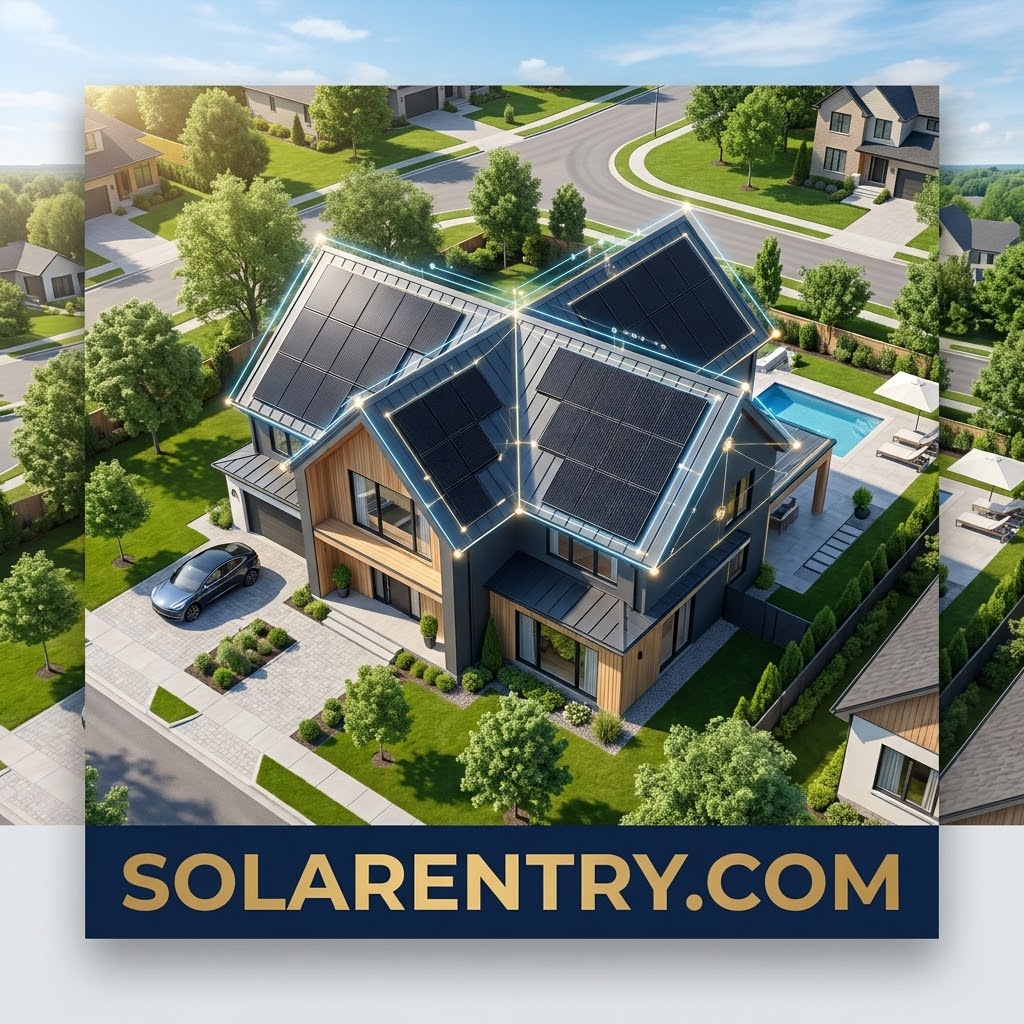
How solar panels for homes work
Home solar panels are made of photovoltaic cells that turn sunlight into direct-current (DC) electricity. An inverter converts that power to the alternating current (AC) your appliances use, and any electricity you are not using right away either flows to the grid or, if you have one, into a battery.
Most homes stay connected to the utility. Your panels cover part of your daytime use, and the grid fills in at night or on cloudy days. Depending on your utility's rules, extra power you send to the grid may earn a credit on your bill. Those rules differ by state and even by utility, so it is worth asking how yours works.
What affects the cost of solar panels
There is no single price for home solar, because every roof and every household is different. The main factors are:
- System size: how much electricity you want to produce, which usually follows your current usage.
- Equipment: panel and inverter quality, warranties, and whether you add a battery.
- Roof and site: roof pitch, material, shading, and how complex the installation is.
- Local rules: permit and utility interconnection requirements, plus any incentives available where you live.
- How you pay: buying with cash, financing with a loan, leasing, or a power purchase agreement (PPA) each change your upfront cost and long-term savings.
The best way to understand cost is to compare written quotes for the same size system. Our guide to choosing solar installers explains what to ask for.
Is my roof suitable for solar panels?
Roof suitability comes down to a few things you can start checking yourself:
- Sun exposure: in the northern hemisphere, south-facing roof sections usually collect the most sunlight, though east- and west-facing sections can also work well.
- Shade: trees, chimneys, and nearby buildings that shade the roof during the middle of the day can reduce output.
- Usable space: you need enough clear, reasonably flat area for the panels, with room around vents and edges.
- Roof condition: if your roof is near the end of its life, it is often smarter to replace it before or when installing solar.
- Structure: an installer will confirm the roof can safely carry the panels during an on-site visit.
A satellite screening can give you a quick first read on sun hours and usable roof area before anyone visits your home. It is a starting point, not a substitute for a professional inspection.
Incentives and savings: check current rules
A federal tax credit for residential solar may be available, and some states, towns, and utilities offer their own programs. Incentives change over time and depend on your situation, so check current rules and talk to a tax professional before you decide. Your actual savings depend on your electricity rates, how much power you use, and how much your system produces.
What to do next
Start with your address. Our free roof check shows how your roof looks from above, so you can decide whether it is worth a conversation. If it looks promising, gather a recent electric bill, then compare quotes from a few installers. You can also read about adding home solar batteries for backup power.
Understanding solar warranties
Solar warranties are not one single promise. Product or equipment warranties cover defects in the hardware, performance or power-output warranties address how much electricity panels should still produce over time, and workmanship warranties cover the installation itself. Inverters and batteries usually carry their own separate terms.
Length and coverage vary by manufacturer and installer. Longer is generally better, but read what is actually covered, who honors the warranty, and what happens if the installer goes out of business. Ask any installer for the terms in writing before you sign.
Check my roof free
Find out in minutes if your roof looks suitable, then book a no-pressure consult.
Frequently asked questions
How long do home solar panels last?
Many panels are sold with warranties that run for decades, and they often keep producing well beyond that, gradually losing some output over time. Check the specific warranty terms for any product you are considering.
Do solar panels work on cloudy days or in winter?
Yes, panels still produce electricity in indirect light, just less than on a bright day. Shorter winter days also mean lower output, which is one reason system sizing is based on a full year of production.
Will solar panels damage my roof?
A properly designed and installed system should not. Installers seal roof penetrations and follow building codes, and your roof's age and condition should be checked first. Ask about workmanship warranties.
Can I get solar without paying the full price upfront?
Options such as solar loans, leases, and power purchase agreements may be available where you live. Each has different costs, ownership, and terms, so compare them carefully in writing.
How much will it cost me for a lease?
Lease pricing depends on system size, your electricity use, the provider, and the contract terms, so we can't give a number here. Compare the monthly payment, any yearly increase, and the contract length in writing. Federal and other incentives change and may have changed or ended for some customers, so verify current rules with a tax advisor. Run the free roof check on our homepage or call 203-818-3242 for a free quote.
Is it better to buy, finance, or pay cash?
There is no single best choice. Paying cash usually costs less over time, financing spreads the cost, and a lease or PPA may lower the upfront cost but you may not own the system. Each option trades upfront cost against long-term savings and ownership. Federal and other incentives change and may have changed or ended for some customers, so verify current rules with a tax advisor. Run the free roof check on our homepage or call 203-818-3242 for a free quote.
Is my house fit for solar?
A house is generally a good candidate when the roof gets plenty of direct sun, has enough clear space, and is in decent condition. Roof direction, tilt, shade, and age all matter, and an on-site visit gives the final answer. The free roof check gives you a quick first look from your address. Run the free roof check on our homepage or call 203-818-3242 for a free quote.
Does the sun come enough in my area, and how many hours of sun do I need?
A common rule of thumb is roughly 4 or more peak sun hours per day, though this is only a guide. Roof direction, tilt, and shading change the result, and cloudy climates can still work. The roof check shows estimated sun hours for your address. Run the free roof check on our homepage or call 203-818-3242 for a free quote.
Do I have to cut trees?
Not necessarily. Panels only need trimming nearby trees if shade materially cuts production. The roof check can help flag shading, and installers assess it on site. Trees are only trimmed if you and the installer agree it is worthwhile.
What kind of solar panels do we have, and what's the capacity?
Most residential panels today are monocrystalline, and a typical panel is roughly 350 to 450 watts. System size is the number of panels multiplied by each panel's wattage, shown in kilowatts (kW). The roof check estimates panel count and system size for your roof. Run the free roof check on our homepage or call 203-818-3242 for a free quote.
When is the free solar gone, or do I have a credit?
There is no single answer, because it depends on the provider and program. Offers described as free or no money down usually involve a lease, PPA, or incentives that can change or end. Any credit, such as a federal tax credit or a utility credit for extra power you send to the grid, varies by home, utility, and provider. Federal and other incentives change and may have changed or ended for some customers, so verify current rules with a tax advisor. Run the free roof check on our homepage or call 203-818-3242 for a free quote.
What warranties come with solar panels?
Solar systems commonly involve several kinds of warranty. A product or equipment warranty covers defects in the panels themselves. A performance or power-output warranty says the panels should still produce a stated share of their original output after a set number of years. A workmanship or installation warranty, usually from the installer, covers problems with how the system was installed, such as roof penetrations or wiring. Inverter and battery warranties are usually separate from the panel warranties, so check each one. Terms and length vary by manufacturer and installer. Ask any installer for the warranty terms in writing. To get details, start with the free roof check on our homepage or call 203-818-3242.
Are solar warranties good, and what do 10-year vs 20-year (and longer) warranties mean?
A longer warranty is generally better, but what matters is what it actually covers. A 10-year warranty means coverage ends sooner than a 20-year or longer one, yet a shorter warranty that covers parts, labor, and shipping can be more useful than a longer one that covers only the part. Also look at who honors it: manufacturer warranties come from the equipment maker, while workmanship warranties depend on the installer, so ask what happens if the installer goes out of business and whether the warranty transfers if you sell your home. Ask any installer for the warranty terms in writing. To get details, start with the free roof check on our homepage or call 203-818-3242.
Are there extra or extended warranty options for solar?
Some installers or third-party providers may offer extended warranties or service plans for an added cost, and some include monitoring or maintenance. Availability, price, and coverage differ, so compare what is included, how long it lasts, who backs it, and how claims are handled before you buy. Ask any installer for the warranty terms in writing. To get details, start with the free roof check on our homepage or call 203-818-3242.
See if your roof works for solar
Enter your address for a free satellite roof check, then book a no-pressure consult or call us.